Industry Design Focus
Risk-led zoning
General storage, maintenance and process-support areas are separated according to client safety requirements. Final electrical, ventilation and fire provisions require project-specific specialist review.
Class A2 flame-retardant fabric buildings, container canopies, and pipe-storage facilities engineered for petrochemical refineries, drill pipe yards, and remote frac sand transshipment depots. Rapid ground-mount without hot-work permits or extensive foundation excavation.
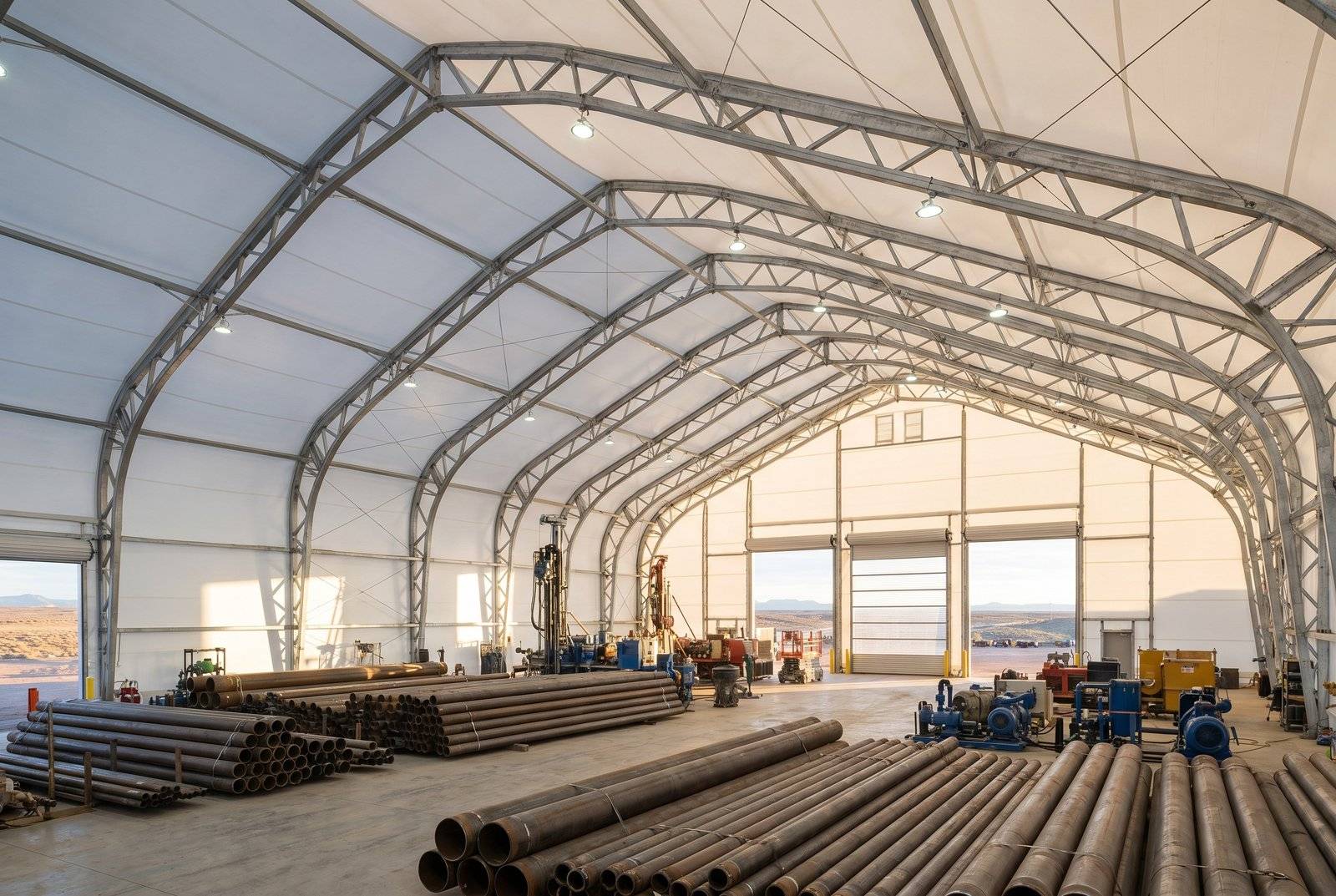
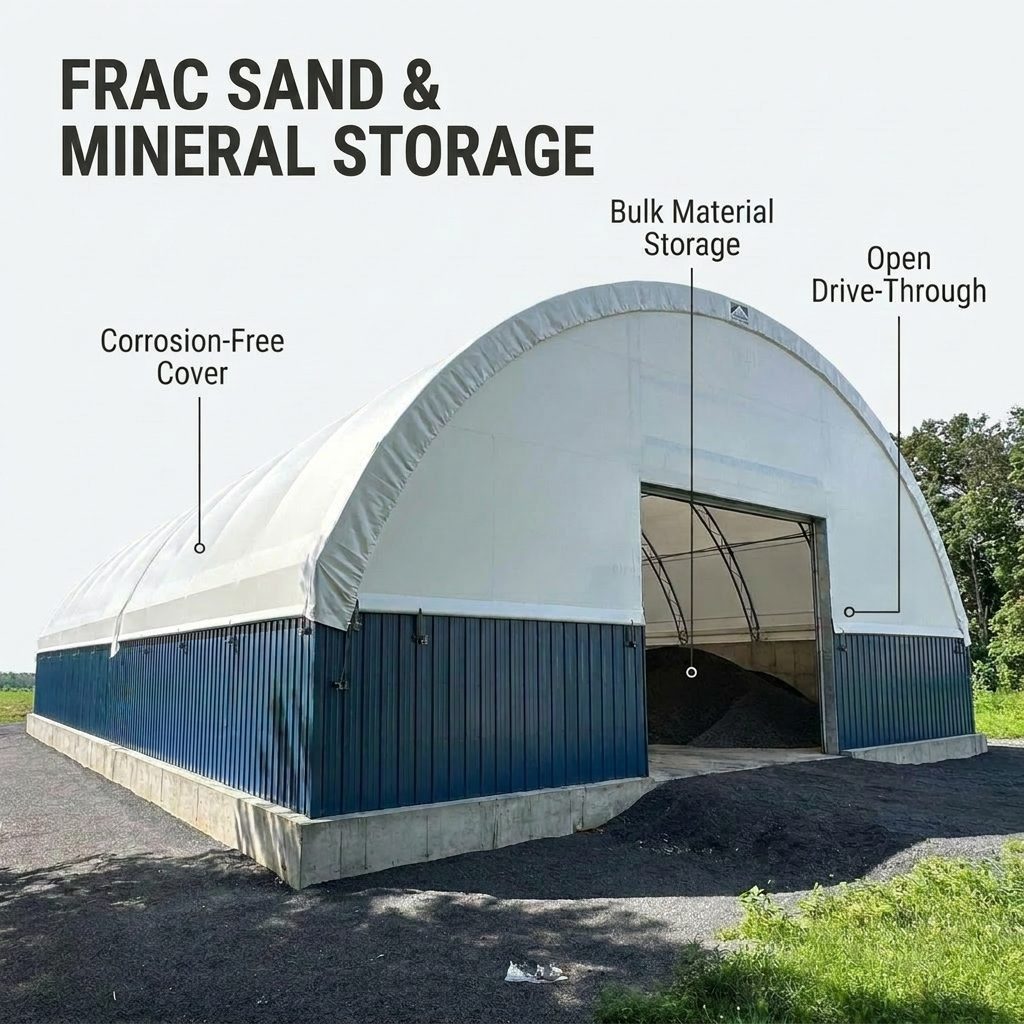
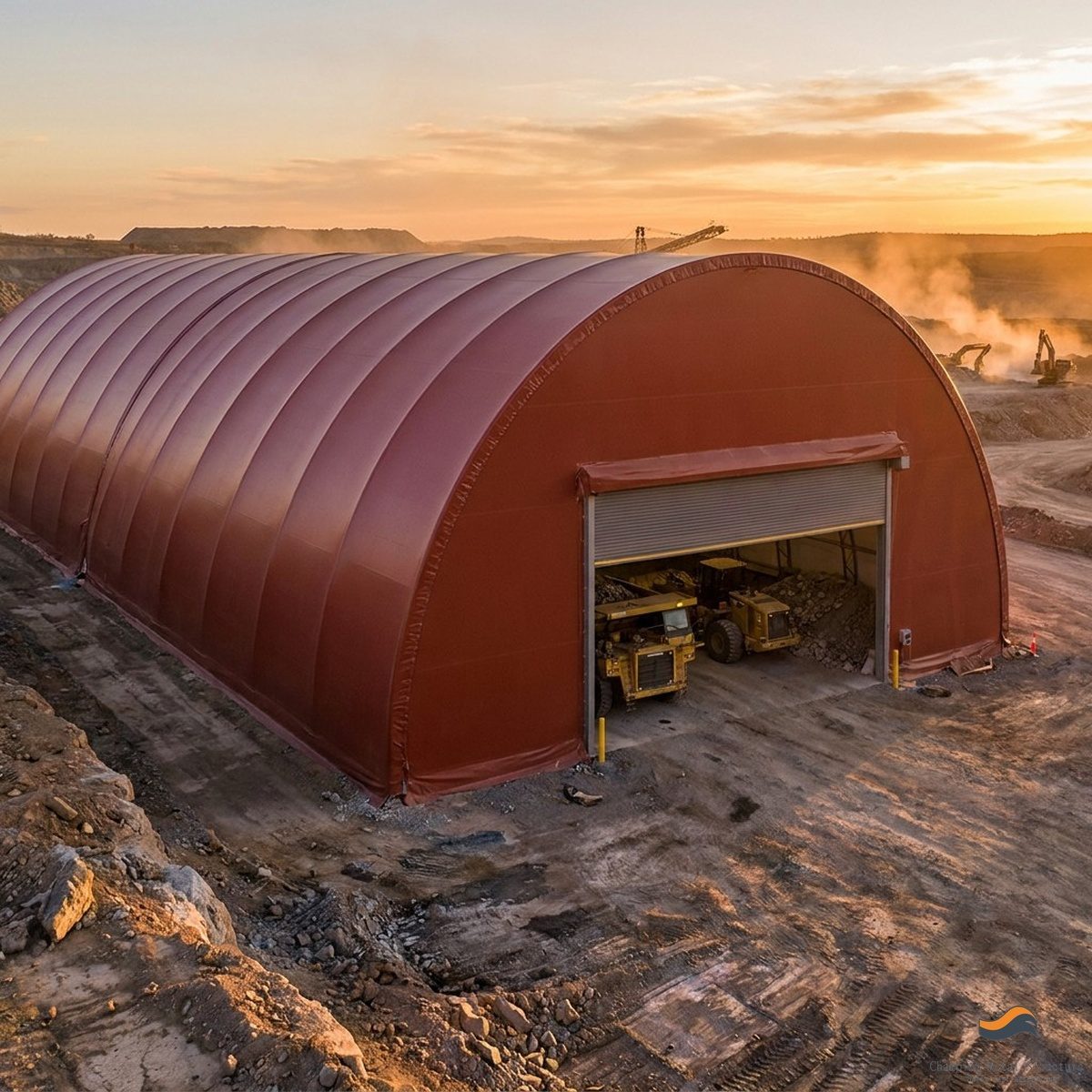
Oil & Gas operations often move into the most challenging environments on Earth. From frozen tundras to scorching deserts, Champion structures provide the durable, climate-controlled space needed for workshops, pipe storage, and logistics. Our buildings are 100% relocatable, moving with your operation as wells are completed or projects shift.
Our solutions provide immediate protection for multi-million dollar assets in locations where conventional construction is impossible.
Dismantle, transport, and re-erect in remote locations without specialized heavy equipment or permanent footprints.
Insulation options to maintain operational temperatures from -40 °C to 50 °C for personnel and gear.
Rugged and reliable shelters for the global energy frontier.
Protect high-value drilling pipe, casing, and sensitive equipment from corrosion and sand ingress.
Immediate all-weather repair facilities for drilling rigs, generators, and site vehicles.
Secure storage for proppants, chemicals, and essential spare parts directly at the wellhead.
Bulk storage for fracturing operations with high loader access and massive clear spans.
Sheltered communal spaces, dining halls, and logistics depots for remote workers and geologists.
Temporary covers for equipment maintenance, environmental remediation, or hazardous material handling.
Mission-ready structures that withstand the rigors of oilfield life.
Large-scale, wide-span shelters for pipe yards and central maintenance hubs. Spans up to 75 m.
The fastest deployment option for remote sites. Mounts on shipping containers for immediate secure workshop space.
| Design Life | 30+ Years (Galvanized Steel Frame) |
| Wind Rating | Up to 180 km/h (Site-engineered) |
| Fabric Strength | PVC 27 oz (900 gsm) HD up to 43 oz (1450 gsm) PVDF |
| Relocation Time | Approx. 5-10 days per structure for removal and packing |
| Foundations | Gravel pad, concrete blocks, or engineered screw piles |
| Flame Retardancy | ASTM E84, DIN 4102 B1/B2 Compliant |
Yes. Every structure is site-engineered for local snow and wind loads. We use specialized arctic-grade PVC membranes that remain flexible at extreme cold and can provide high-R-value insulation liners.
Yes. We provide engineered foundation layouts that often use portable ballast, steel base plates, or screw piles, minimizing the need for pouring concrete in remote exploration areas.
Absolutely. All Champion PVC membranes are treated for flame retardancy and meet international standards (ASTM E84, DIN 4102 B1/B2), ensuring safety in oil field environments.
For specialized gas processing or hazardous areas, we can design the structure with airtight seals and positive pressure ventilation systems to prevent the ingress of external vapors.
Get a custom quote for your oil & gas infrastructure today.
Get an Energy QuoteOil, gas and energy projects combine valuable equipment, remote worksites, dust, heat, cold, corrosion and strict operating procedures. Spanbest develops storage, maintenance and process-support enclosures around the client hazard classification, equipment envelope, ventilation basis and site mobilisation plan.
General storage, maintenance and process-support areas are separated according to client safety requirements. Final electrical, ventilation and fire provisions require project-specific specialist review.
Door size, clear height, crane or forklift routes and laydown areas are coordinated with the longest and heaviest operational items.
Foundation concepts, transport modules and erection sequence are selected for site access and the expected service duration. Relocation is planned rather than merely claimed.
Bolted or mechanically assembled structures can reduce some site fabrication activities, but they do not define whether a building is suitable for a hazardous operation. The client hazard classification, stored substances, ventilation, ignition control and emergency strategy must still guide the enclosure design.
Spanbest records those requirements as project inputs and coordinates the structural package around them. Any certified hazardous-area systems, fire strategy or process ventilation remain within the agreed specialist scope and are identified clearly in the proposal.